DevOps CI/CD: Exploring Business Benefits

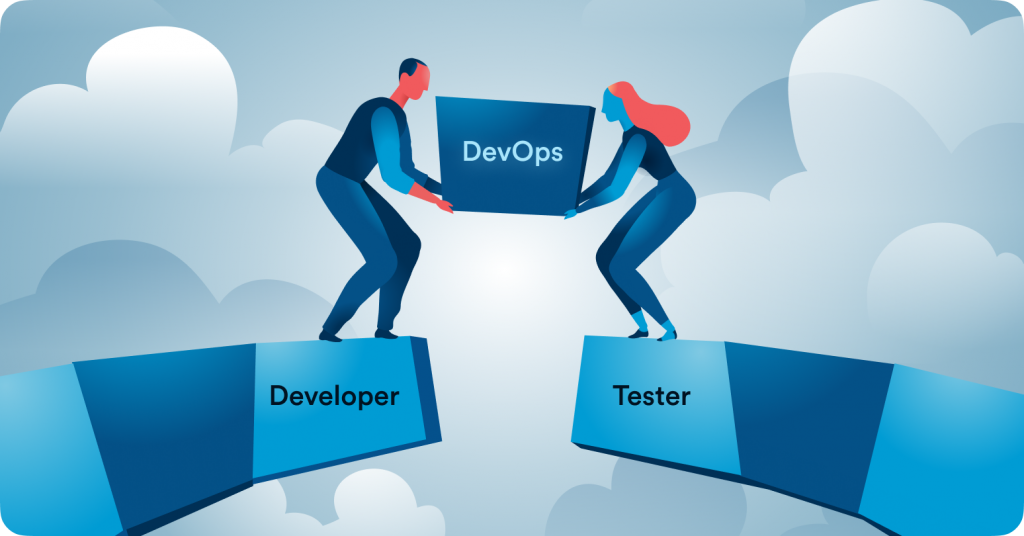

Development and operations teams having polar opposite goals and methods of working is a common occurrence in software development companies. However, as an organization, dealing with such disparity and division only prolongs the product life cycle further.
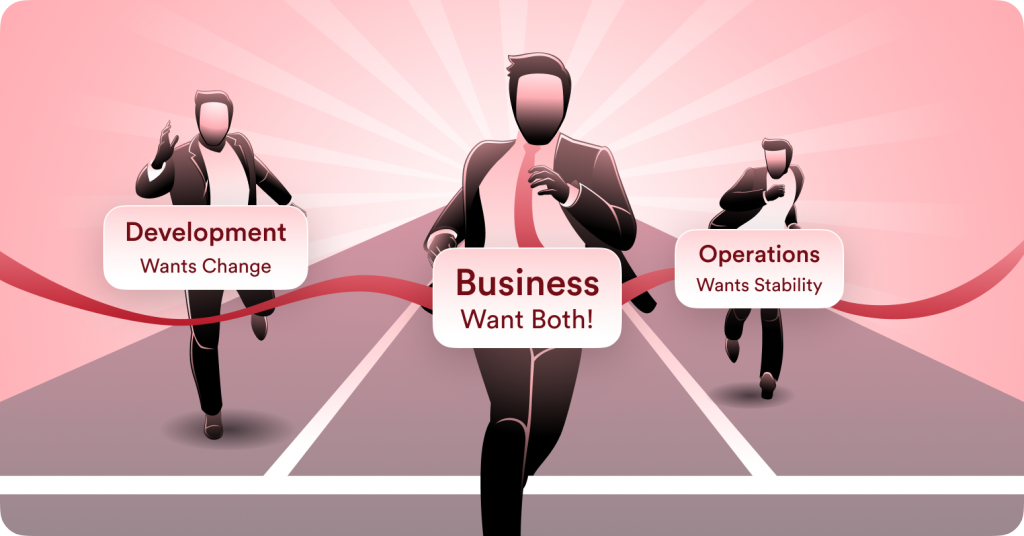
Evolving solutions and pushing new updates are what interest developers the most. On the other hand, maintaining stability and keeping downtimes at bay is the prerogative of the operations team.
With such contrasting objectives of these departments, there is bound to be conflict and delay. To bridge the communication gap between Development and Operations, the concept of DevOps was popularized. Thus, DevOps is the branch that aims to bring these departments closer to reducing performance problems and code errors.
As one can understand, fast mechanisms to build codes, run tests, and finally deploy updated software versions are crucial to shorten the feedback loop between developers and operators.
Continuous Integration and Continuous Delivery are the tactics that form the backbone of such sophisticated pipelines in DevOps.
DevOps Continuous Integration: What Is It Exactly?
Any developer true to his salt can tell you that simply (not so simple though) writing a code is still miles away from what a coder is actually expected to do. In actual fact, it’s the compilation, testing, and execution that follows it that takes you to the finish line.
Wouldn’t it be great if the developers were only required to commit their code, and the server would automatically take the subsequent actions?
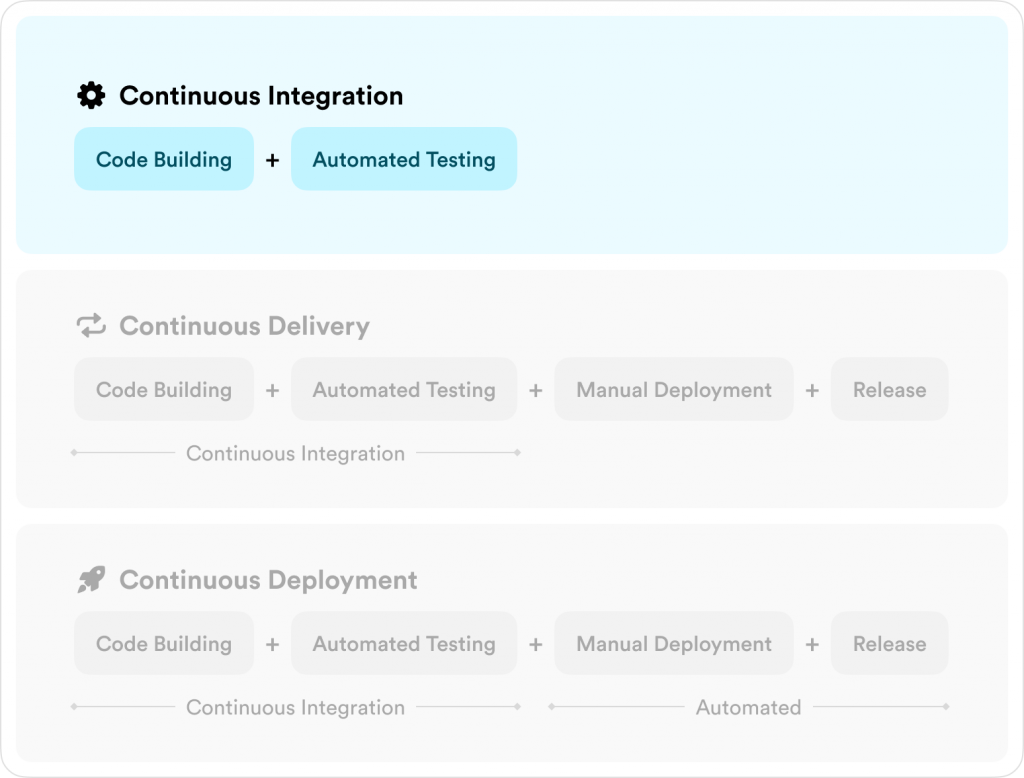
In a nutshell, Continuous Integration refers to the automatic and continuous use of code by the server, from testing to deployment, without the developers having to lift even a finger.
To put it more formally, automatically merging a new code to the existing repository is called continuous integration. Since the major aspects of development get automated, continuous integration forms the backbone of all large-scale DevOps endeavors.
As stated before, developers are always concerned about evolving their existing systems and pushing updates. This entire project gets delayed when the compulsory testing of the code has to be manually undertaken by the developers themselves. By having a continuous integration model, developers can simply churn out codes and need not worry about any dead codes, which will automatically be caught during the automated testing process.
How Does CI Impact Your Business?
Irrespective of the industry, software development and deployment are key differentiators when it comes to competition and competitiveness. Businesses that prioritize efficient development workflows gain a significant advantage. Faster development workflows ensure that new functionality is brought to the market at regular intervals, providing businesses with a competitive edge.
We’ve seen how the IT teams, especially the developers, benefit from continuous code integration. However, the same process also has tangible benefits for their business counterparts, including those who work in marketing, sales, analytics, customer relationship management, etc.
Here are the biggest advantages of Continuous Integration for businesses:
- Reliable Solution
The continuous addition of code to the repository prepares the pitch for faster updates. However, when test automation supports this, it guarantees that the pushed code is functional and doesn’t break the application in any way. Thus, with continuous integration in place, businesses can ensure that the end users working in different departments can directly make use of these solutions to drive growth, without worrying about the ambiguity in the results that they may give.
- Cost Optimization
Cost optimization through continuous integration occurs in two ways.
Firstly, reducing the dependence on manual expertise for testing significantly relieves the burden of recruitment expenditure.
Secondly, and more importantly, by automating the integration of code to the server, followed by rigorous automated testing, systems can ensure that there are fewer chances of errors and outages. This reduces the effects of downtimes drastically, thereby cutting the losses incurred during such periods of delay.
Outages call for greater resource and time allocation to get the system back on track. Thus, without mechanisms like continuous integration, the time and money wasted on such repairs keep on increasing exponentially.
- Faster Release
Gaining a competitive advantage is equally about bringing new functionality at a faster rate, as it is about making your solutions more robust. Since continuous integration covers both aspects comprehensively, businesses need to invest in it to have the edge. Continuous integration guarantees higher levels of automation, expediting the build time, testing, and the final release of the software version.
Continuous integration is also an enabler for the larger continuous delivery process. Hence, businesses get to improve their functionality and products at a faster rate through continuous integration. So, it impacts how their customers perceive their brand, and how much they wish to engage with it in the future.
Coming To Continuous Delivery
The continuous methodologies work together to give the best possible output in a DevOps project. Continuous integration involves the automation of the build and testing stages of software development. On the other hand, what occurs beyond continuous integration is when the code is pushed into different work environments.
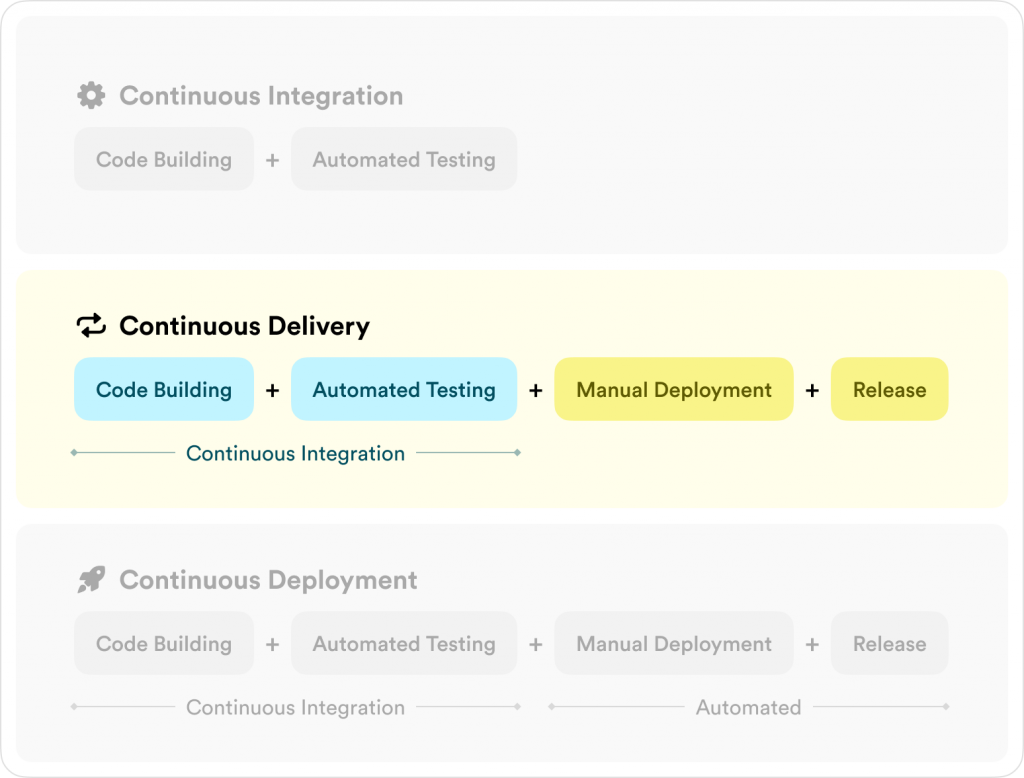
In general, the code must pass through all required stages of the production pipeline before it becomes usable for the desired product. Automating this code movement through all environments of a short build cycle is Continuous Delivery. So, in combination with Continuous Integration, Continuous Delivery automates the building, packaging, and deployment stages of software development. This translates as an expedited time to market for software updates, giving users a taste of advanced functionality within days or weeks.
What about Continuous Deployment?
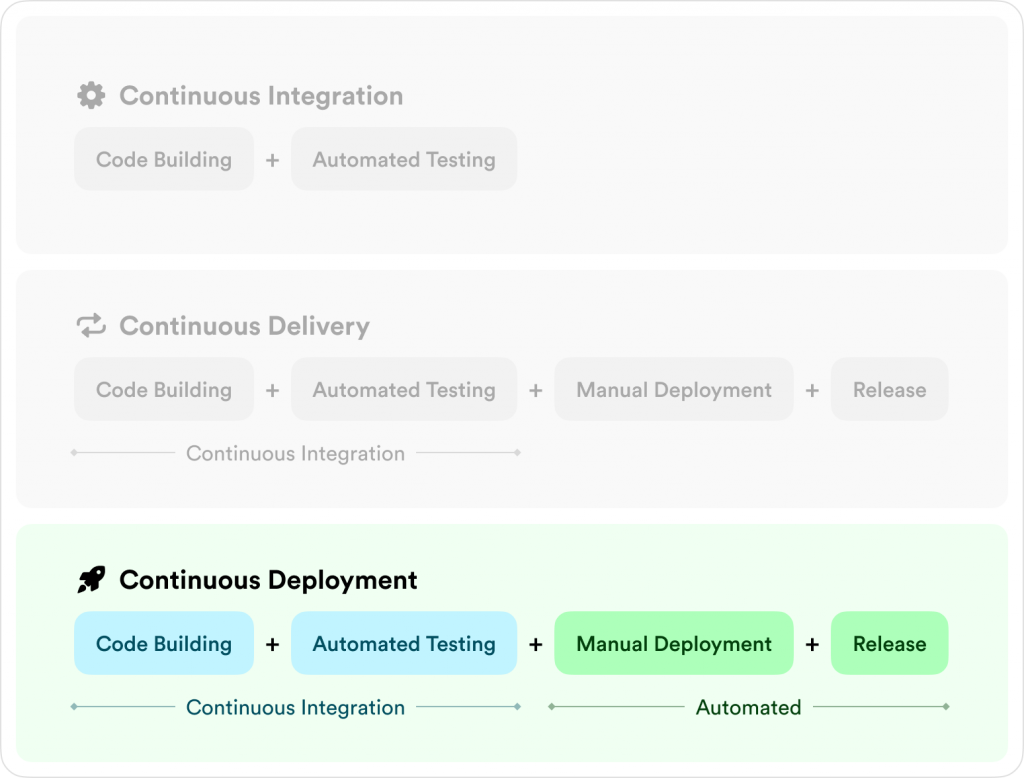
Simply, this is the same as Continuous Delivery but fully automated. In this approach, there is no need to do manual deployment for a package of changes every month, quarter, or year. Instead, customers can see a continuous stream of improvements and the quality increases by deploying small batches of changes in a short time like every day.
Continuous Delivery and Feedback Mechanisms
The real assessment of software is through the feedback that you receive once the end-users use it in real time. Again, through high degrees of automation, continuous delivery ensures that the deployment frequency is high enough to shorten the feedback loop.
This means that the deployment is quick enough to give users enough time to weigh in with their feedback. The developers can quickly identify any problem and resolve the issues before carrying out future development cycles of the same software, thanks to prompt feedback.
This also gives developers the answer to one of the most important questions- whether their solution could solve the intended problem, or did it end up adding to it in one way or the other.
Benefits of Continuous Delivery for Businesses
Almost all organizations are aware of using technology as a key differentiator in the market. To steer through the competition, the way you build and leverage technology for your business must be optimized.
These benefits of continuous delivery models help you achieve such optimization in less time:
- Going For a Long Haul
Technology investments should never be about achieving short-term goals only. Sustainability in the development process is important to help businesses stay in the game for a longer period, surviving through thick and thin.
Sustainability requires smart work, and continuous delivery provides exactly that with high degrees of automation and flexibility. Automation pipelines in continuous delivery models remove the burden of completing repetitive rule-based tasks manually.
Continuous delivery models enable businesses to design pipelines that help them take their products to their customers in shorter spans. Moreover, it also gives them the space to experiment with releases and upscaling before committing to steep investments.
- Accelerated Growth
To catalyze growth at an enterprise level, companies need to shorten the time to market for the end product. Continuous delivery establishes a channel for small build cycles, where continuous integration promptly leads to continuous deployment.
Further, continuous delivery also ensures that the aspects of delivery like restarting web databases and servers keep happening consistently. All these are crucial components for any digital business because they enable quick product placement without compromising product quality.
- High Productivity
Automation in itself is a great driver for higher productivity. As the time taken to complete every product reduces, the company can maximize and expand deliveries, facilitating high-profit earnings
This automation should not be directionless, and should not promote irresponsible output generation. Therefore, continuous delivery highly trusts a methodology where the flexible delivery pipeline executes with utmost accuracy and precision.
Moreover, the methodology also contributes to higher productivity by allowing the workforce to devote more time to developing a vision and a strategy for growth. Automate the implementation to reduce the time taken for the deliverables to reach the end users.
Implementing DevOps CI & CD TOGETHER or SEPARATELY?
The road to achieving DevOps CI/CD effectively is not an easy one, it requires a cultural shift that all stakeholders need to understand deeply. Also, it is not a project that you can forget about at a certain stage, but its implementation has to improve continuously as it doesn’t have an end date.
I have been the Tech. Lead for multiple clients, most of whom are using the Salesforce Commerce Cloud (SFCC) platform. In addition, I’m the one who has covered/handled the DevOps role for my clients. Also, have dealt with various existing CI/CD tools on the internet, the majority of them are:
- Bitbucket + Bitbucket Pipelines.
- Bitbucket + Jenkins CI.
- GitHub + CircleCI.
Based on my experience, I would say that most projects these days need both CI & CD processes to work in an integral way to achieve the best possible cost-saving and most efficient solution. It also satisfies the technical requirements for the cultural shift we talked about earlier. However, sometimes, specific system limitations or needs require implementing only part of these processes. Additionally, some businesses might not desire the cultural shift itself.
On one hand, if you’ve got multiple developers working on a project, compiling the codes written by all of them quickly and seamlessly is important for the build cycle to kickstart. Processing all these codes manually is a recipe for errors and bugs, which prolongs the delivery timeline indefinitely.
Therefore, if you have a large-scale development project going on, with several developers working to keep on it, then eradicating the need for manual processing and bridging the gap between complicated development processes can be effectively done by using and focusing on Continuous Integration solutions.
On the other hand, inexperienced leaders generally struggle with product delivery pipelines, which are important for faster delivery and growth. For such businesses, it is important to have an end-to-end automation solution that not only adds velocity to the development process but also ensures optimal quality. Since continuous delivery models cover components ranging in every stage of the development cycle, businesses looking to reduce their time to market objectively should invest more in Continuous Delivery/Deployment solutions.
Implementing the two processes separately or together is entirely dependent on the requirements, system limitations, and the teams working on a project. However, understanding that continuous integration and continuous delivery complement each other and work together is important. It’s recommended not to separate them. Therefore, most e-commerce businesses demonstrate that CI & CD both need to work in tandem for better results. Also, delivering DevOps benefits via CI & CD to such businesses is easier.
Trendy Tools for DevOps CI/CD

Although CI/CD is a cultural change, the following is a list of some common tools on the internet that could help to get the job done quickly.
- Bitbucket Pipelines
With Bitbucket Pipelines, you can build, test, and even deploy your code automatically, based on a configuration file in your repository. Bitbucket integrates a CI/CD service within its system. It creates cloud containers enabling running commands similar to a local machine but with the benefits of a newly configured system.
- CircleCI
This CI/CD tool automates code build, testing, and deployment across a user’s pipeline, supporting rapid software development and publication. CircleCI generates builds as developers commit new code lines. The server can also host continuous integration as a cloud-managed service or run behind a firewall on a private network.
- Jenkins CI
An open-source automation server where the central build and continuous integration process happens. With hundreds of plugins, Jenkins can be used to build, deploy, and automate software development projects. A Java-based program runs on Windows, macOS, and other operating systems similar to UNIX.
- Azure Pipelines
You can make code projects available to others by automatically building and testing them with Azure Pipelines. You can use Azure Pipelines to test and build your code and ship it to any target using CI/CD. It works with just about any language and project type.
- Gitlab
A DevOps software package that can develop, secure, and operate software. offers functionality to collaboratively plan, build, secure, and deploy software as a complete DevOps Platform. It is scalable and can be hosted on-premises or on cloud storage. It also includes a wiki, issue-tracking, IDE, and CI/CD pipeline features.
- Bamboo
A continuous integration server from Atlassian, the makers of JIRA, Confluence, and Crowd. It is used to build, test, and deploy applications automatically as per requirements. Some of the Major features of Bamboo include its ability to support multiple builds and its ability to integrate with a large number of code repositories and build tools.
Final Thoughts
As you can see, the benefits of CI/CD are simply too many for any business to ignore at this point. Solutions to ensure smooth software development and delivery cycles have come up in the market earlier as well.
But these legacy systems had several loopholes too. With experts handling continuous integration and continuous delivery, you not only get to accelerate the deployment of solutions in real-time but also get the benefits of high quality, along with the enhancement in productivity.